
-
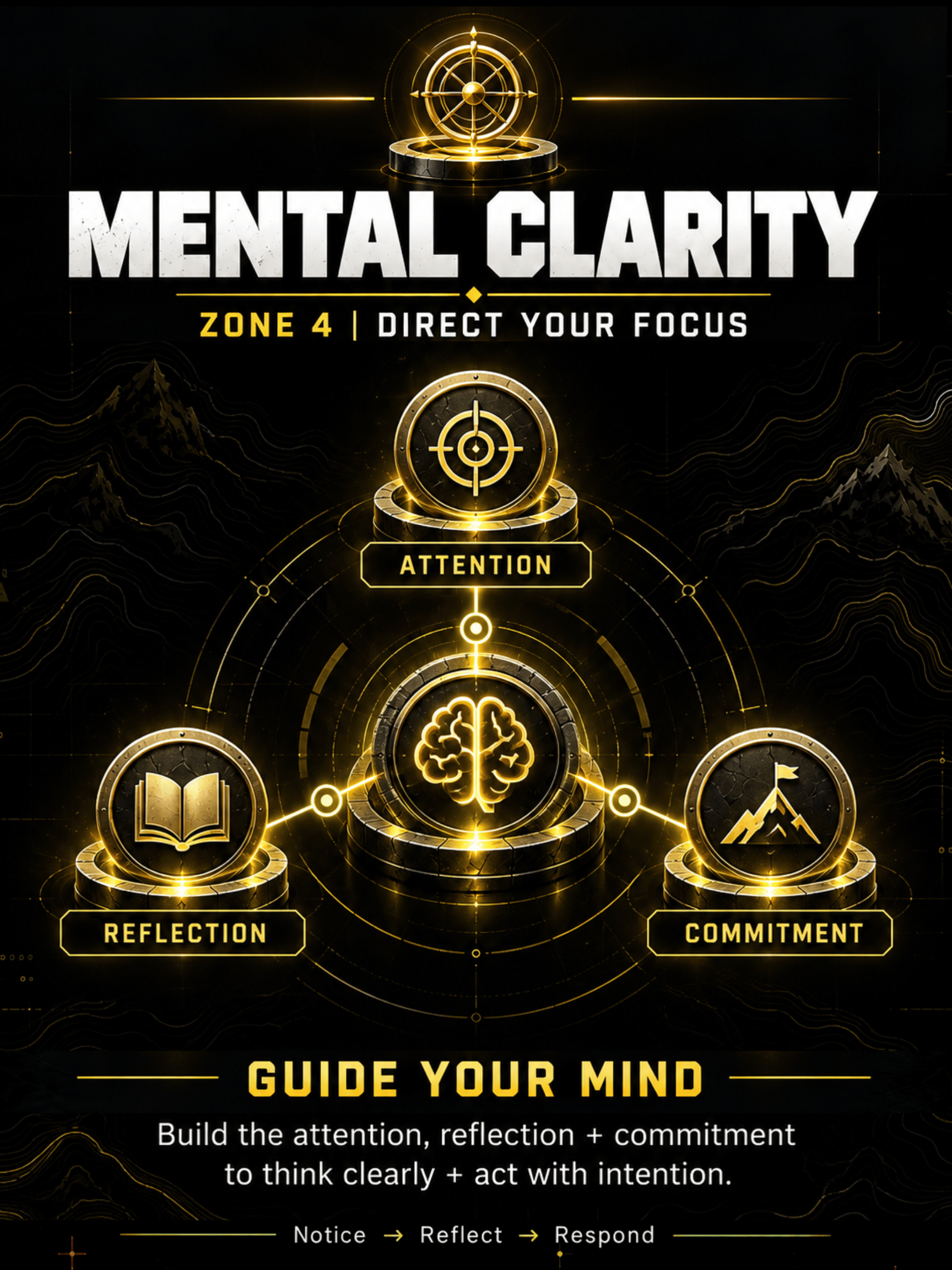
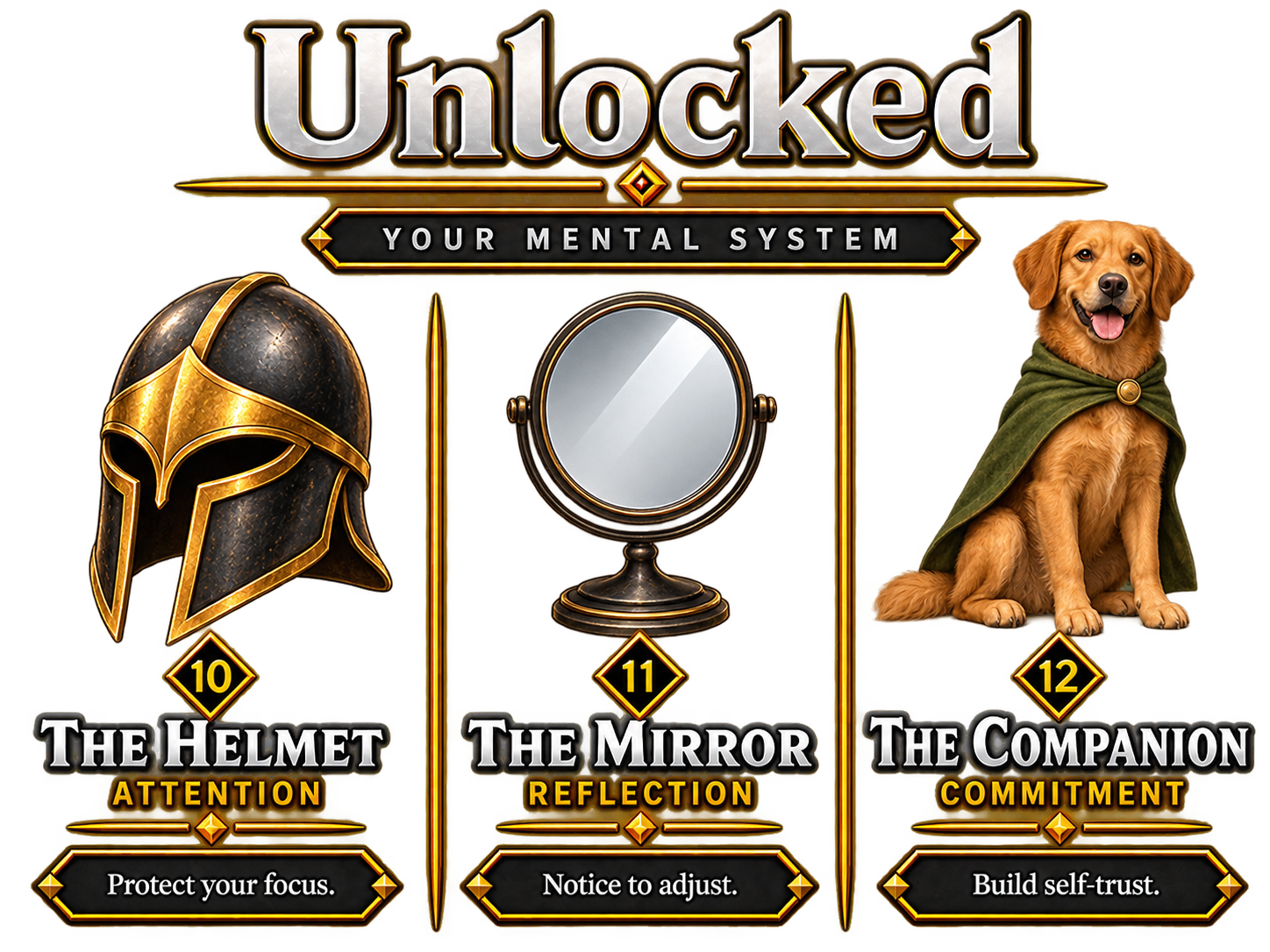
When your attention is scattered, your actions usually follow. You react to whatever is loudest, switch between tasks + lose track of what actually matters.
💡 This zone helps you clear the noise, notice your patterns + follow through with more intention. You do not need control over every thought.. just a better system for deciding what deserves your attention + what you do next.
-
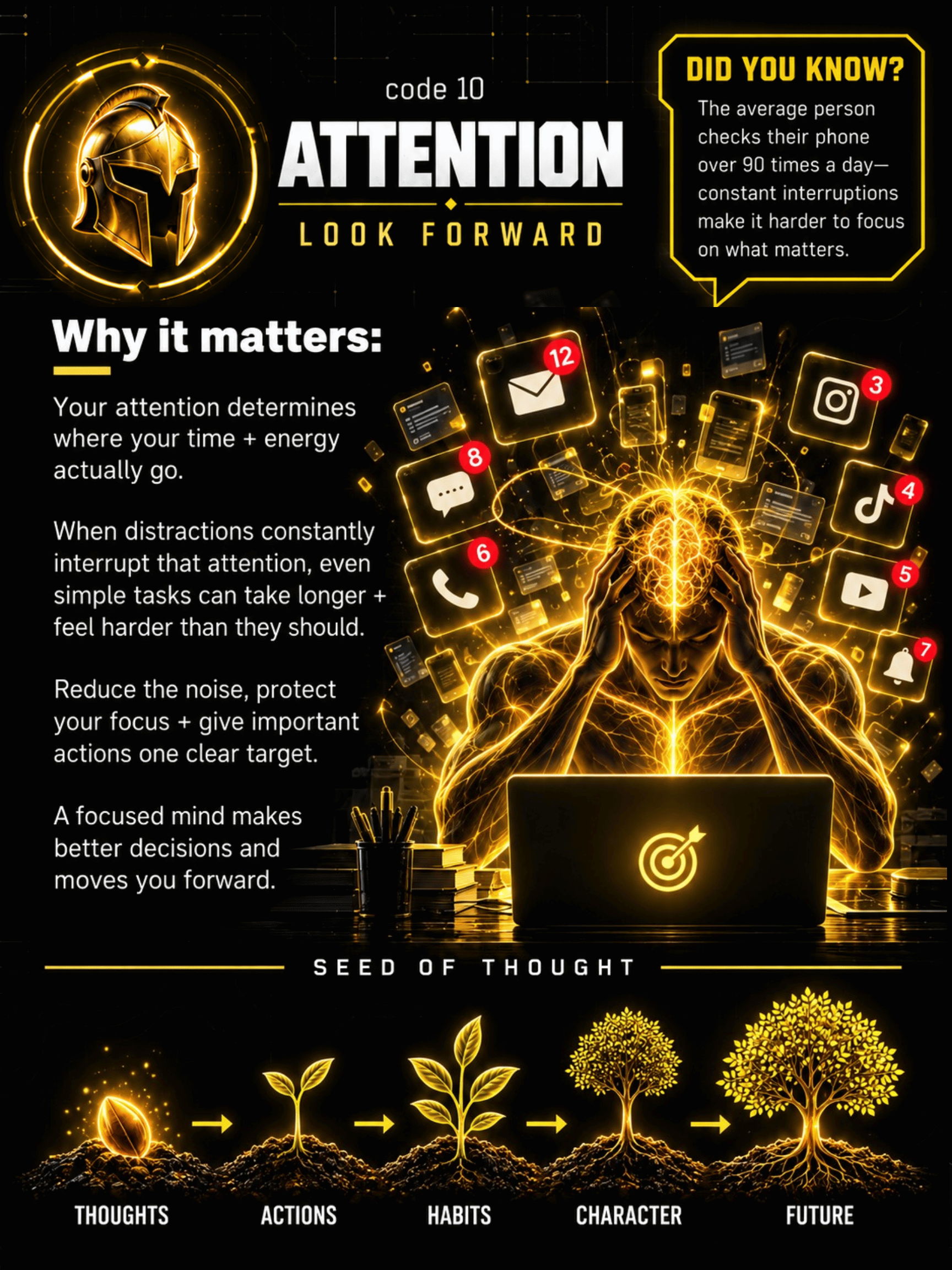
Attention determines where your time + energy actually go. When distractions constantly interrupt that attention, even simple tasks can take longer + feel harder than they should.
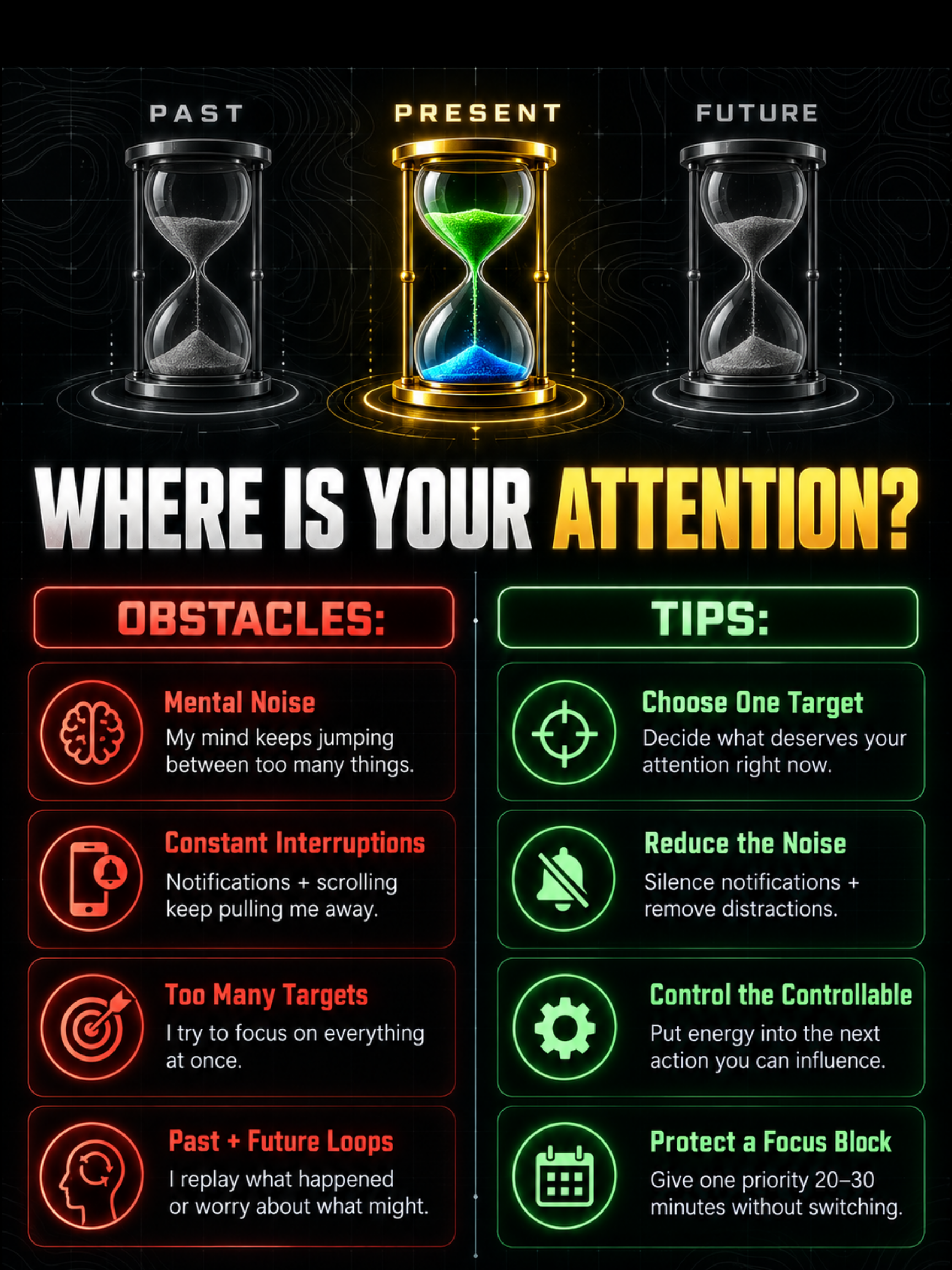
🐝 Reduce the noise before asking yourself to focus harder. Turn off unnecessary notifications, work on one thing at a time + create short periods where your attention has one clear target.
-
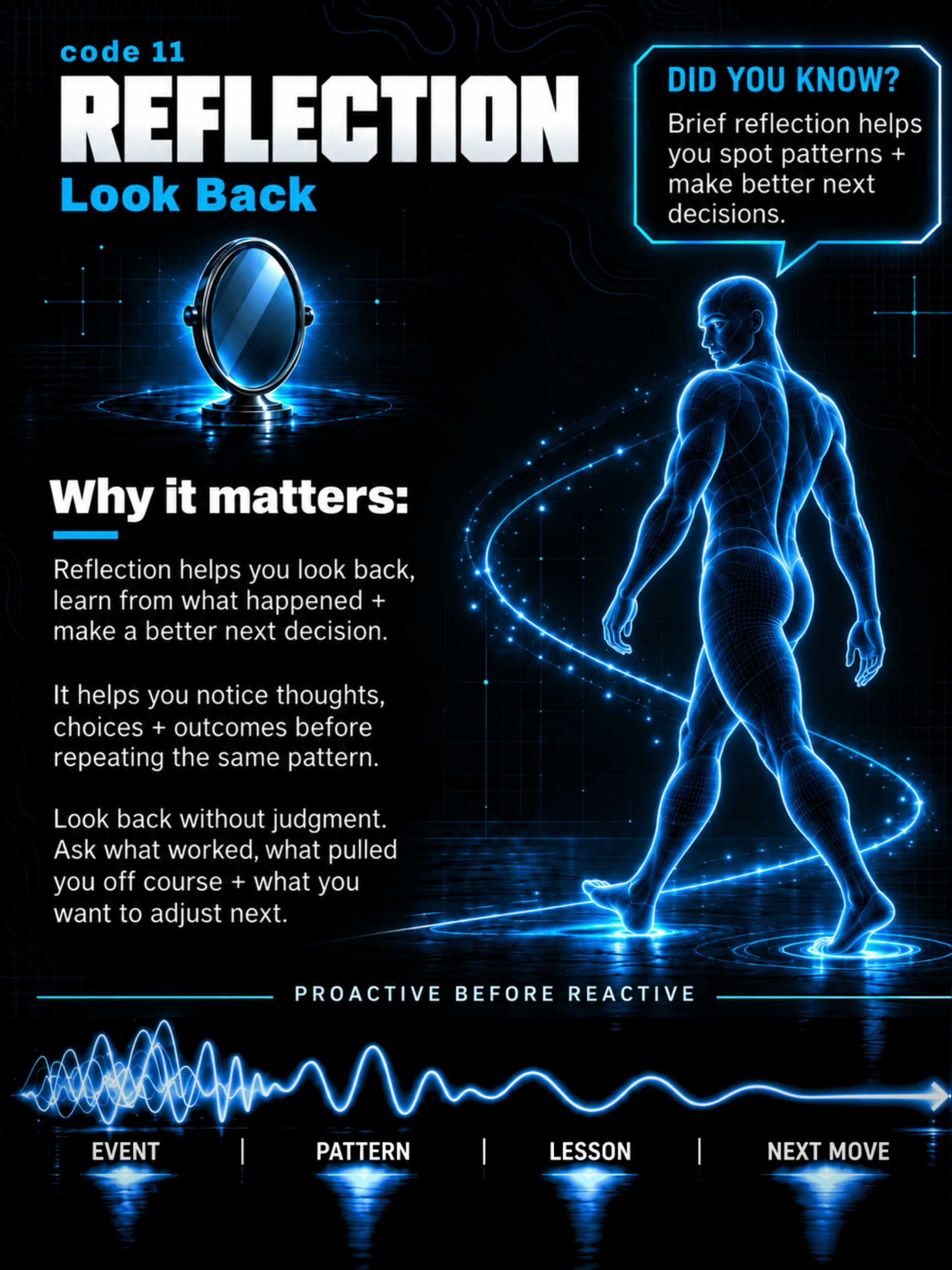
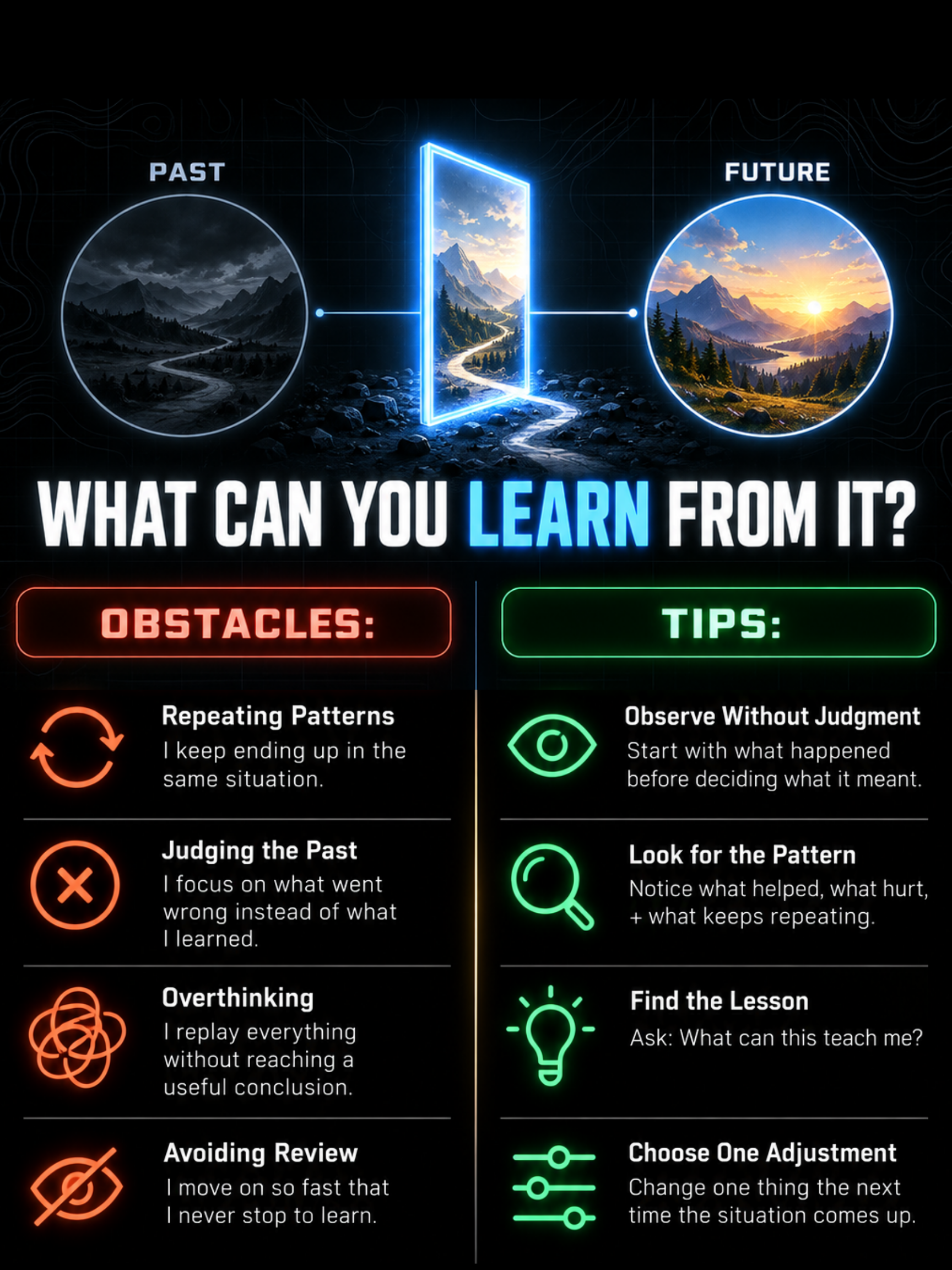
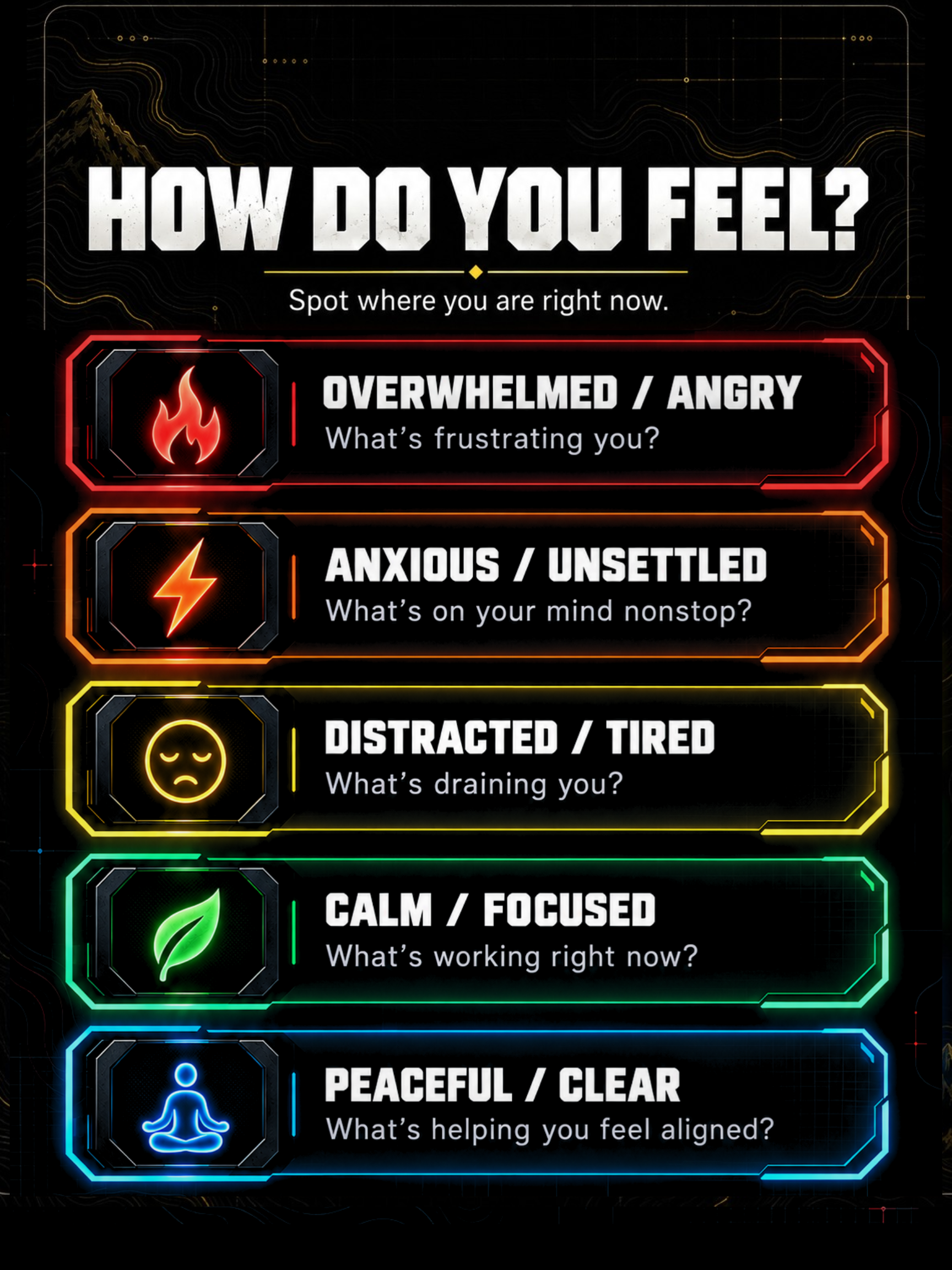
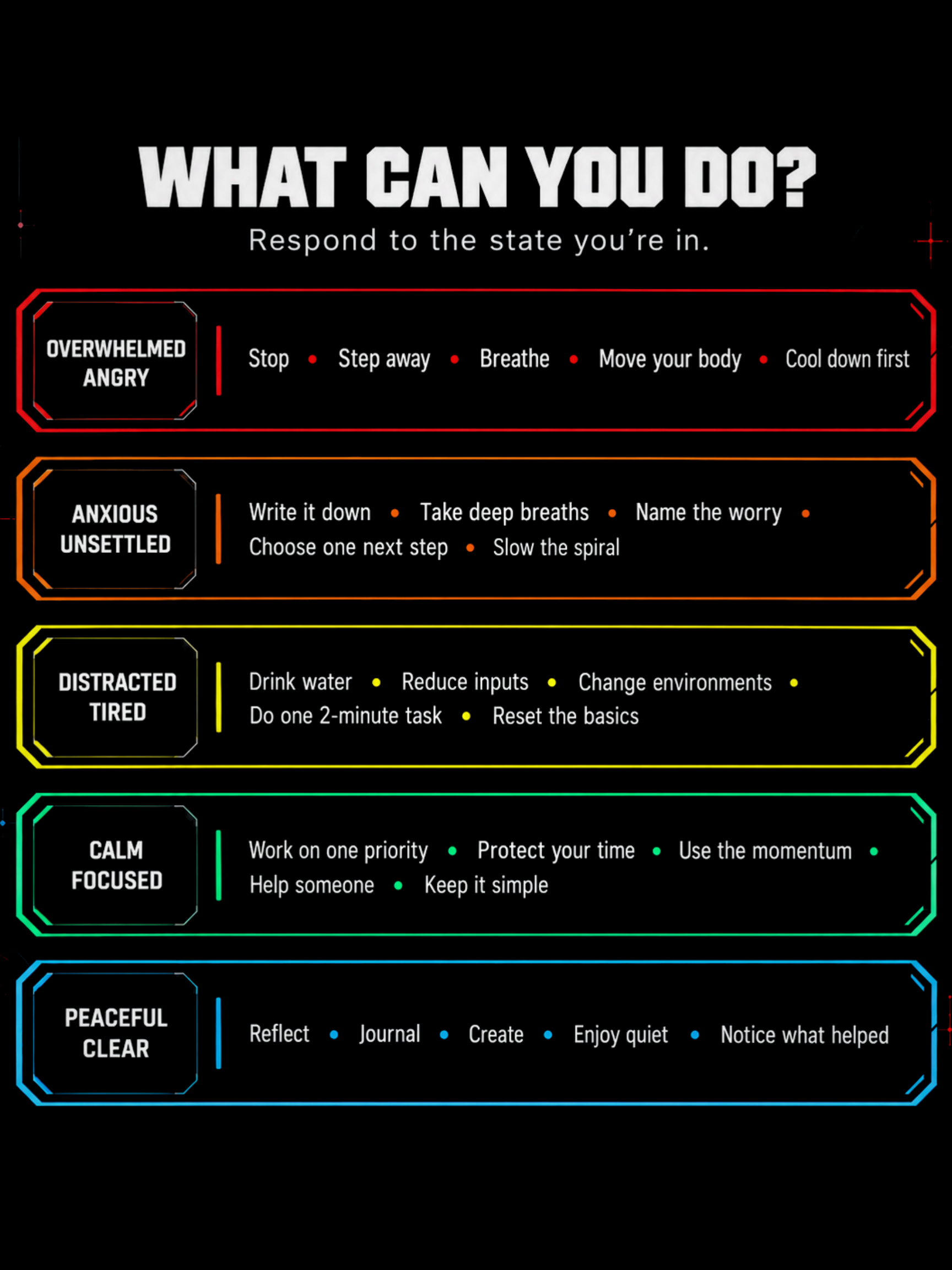
Reflection is how you learn from what actually happened instead of repeating the same patterns automatically. It gives you space to notice your thoughts, reactions + decisions before deciding what needs to change.
🤔 You do not need to silence every negative thought. Notice it, question it + turn it into something useful. A few minutes of journaling, reviewing your day or asking better questions can turn experience into feedback.
-
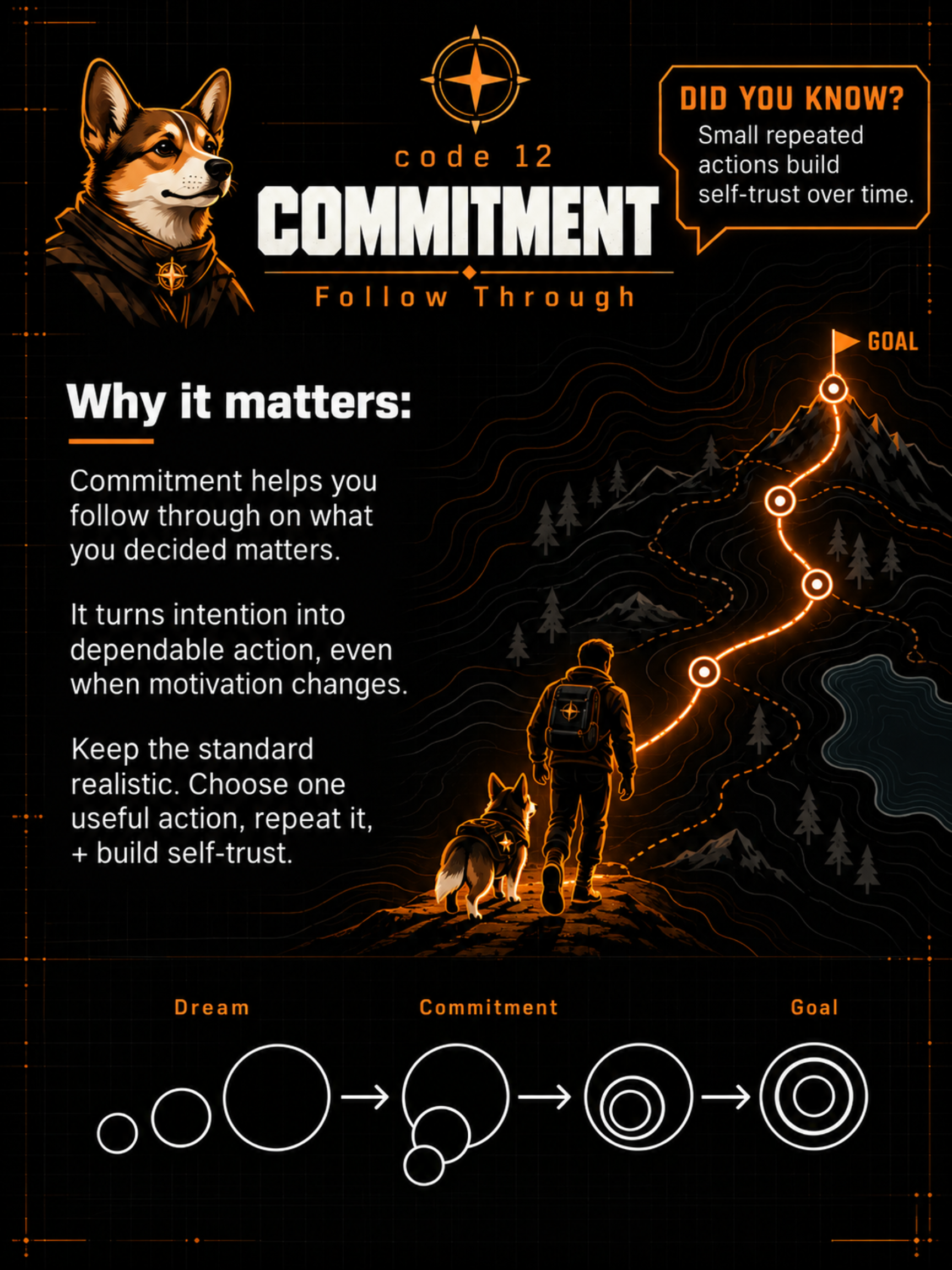
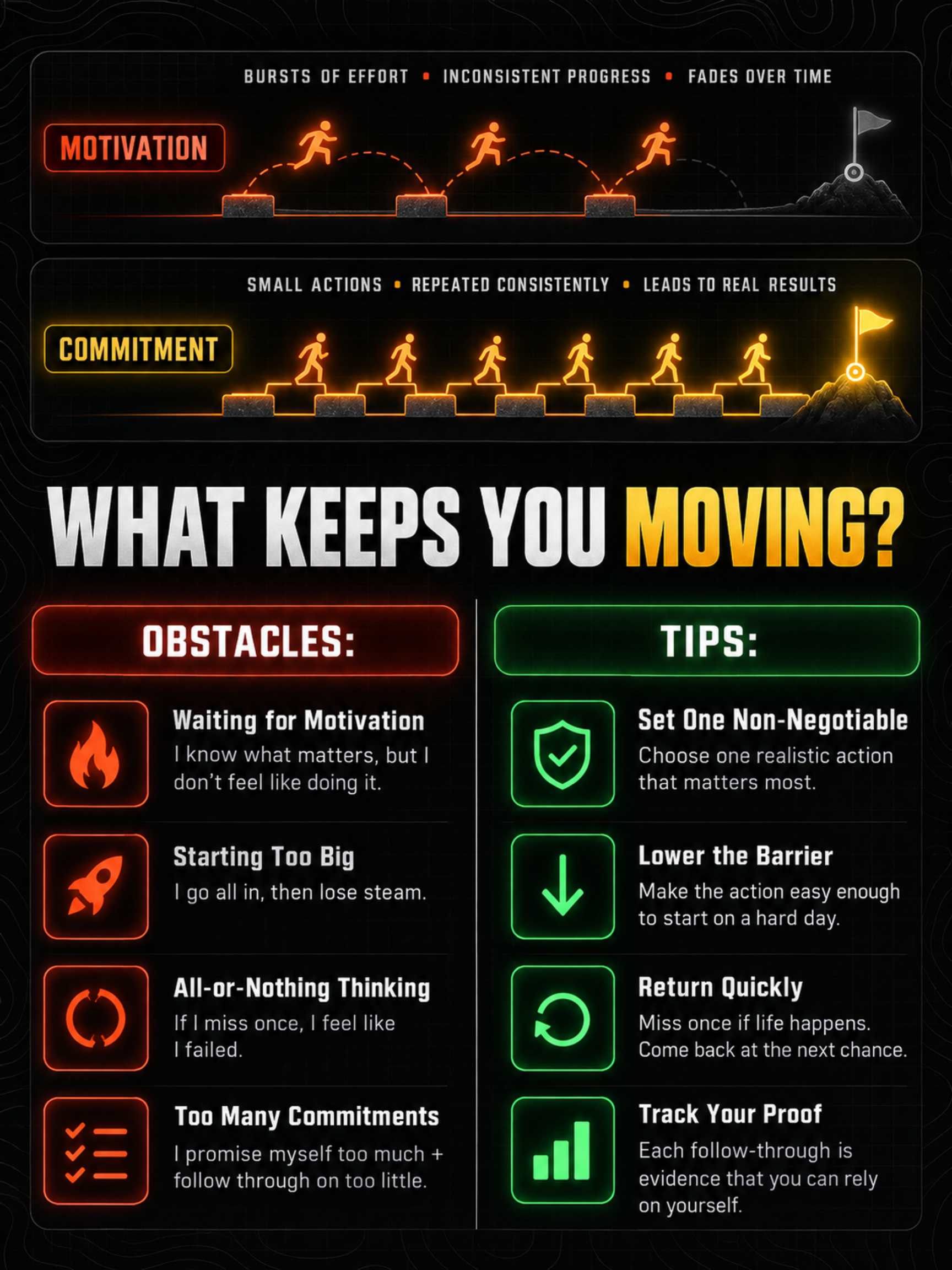
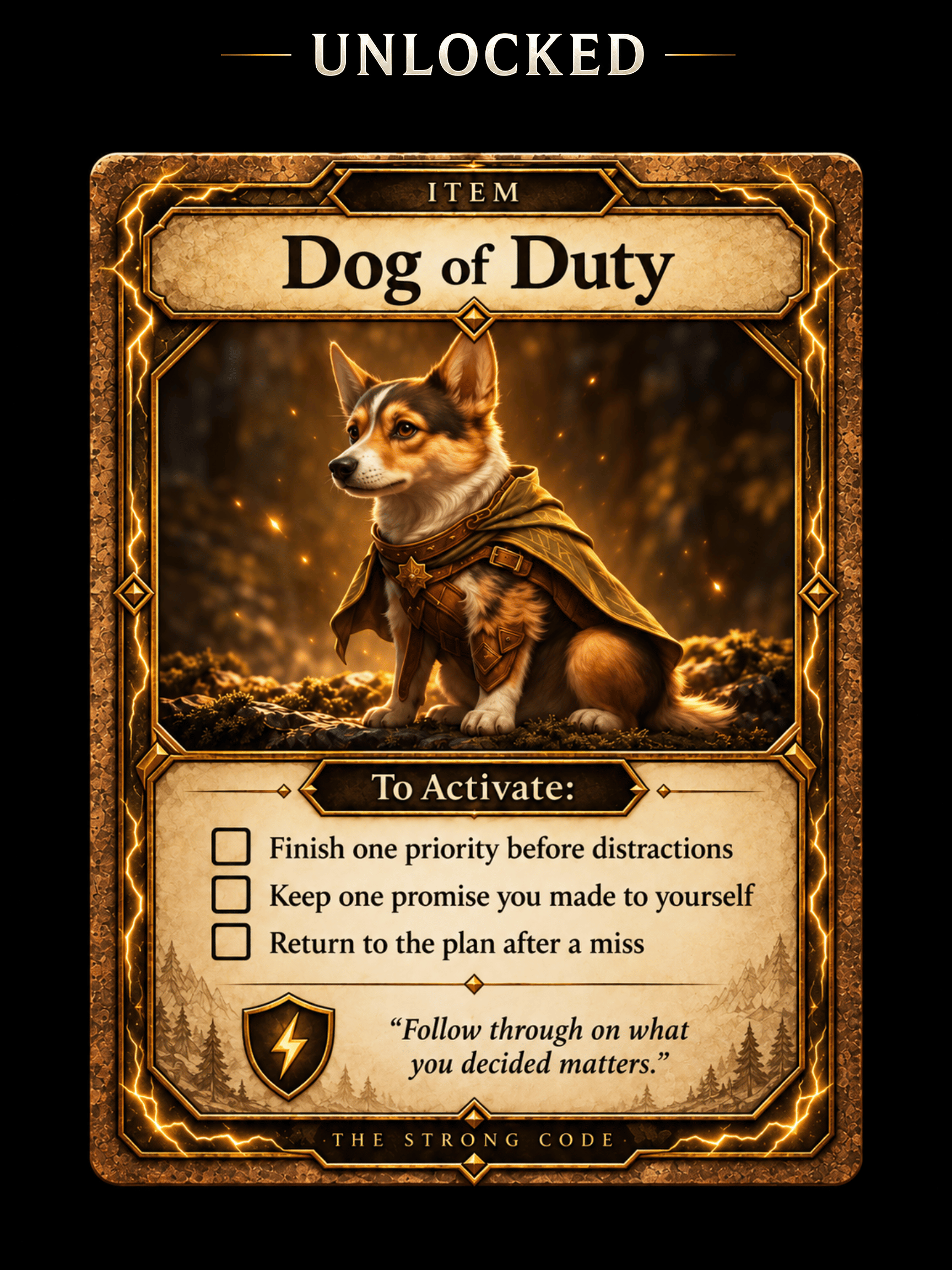
Commitment is the bridge between what you intend to do + what you actually follow through on. It is not about forcing yourself through everything.. it is about making a few important actions dependable enough that you stop renegotiating them every day.
🤝 Keep the standard realistic. Choose what matters, make it clear + follow through often enough to build evidence that you can rely on yourself. Miss once if life happens.. then return to the system.
-
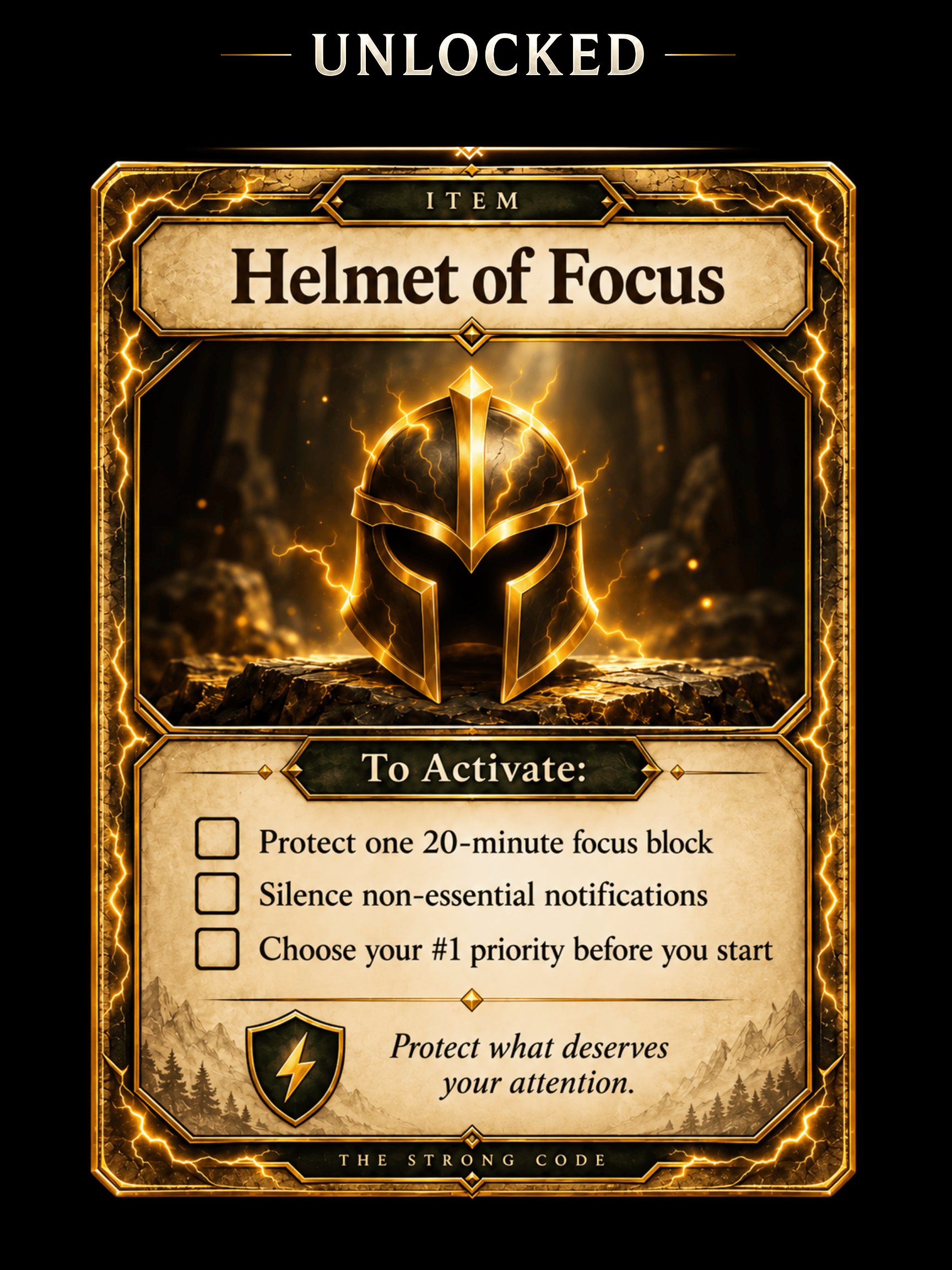
Choose one task that matters + give it 20–30 minutes without unnecessary notifications, tabs or multitasking.
One clear target is enough.
-
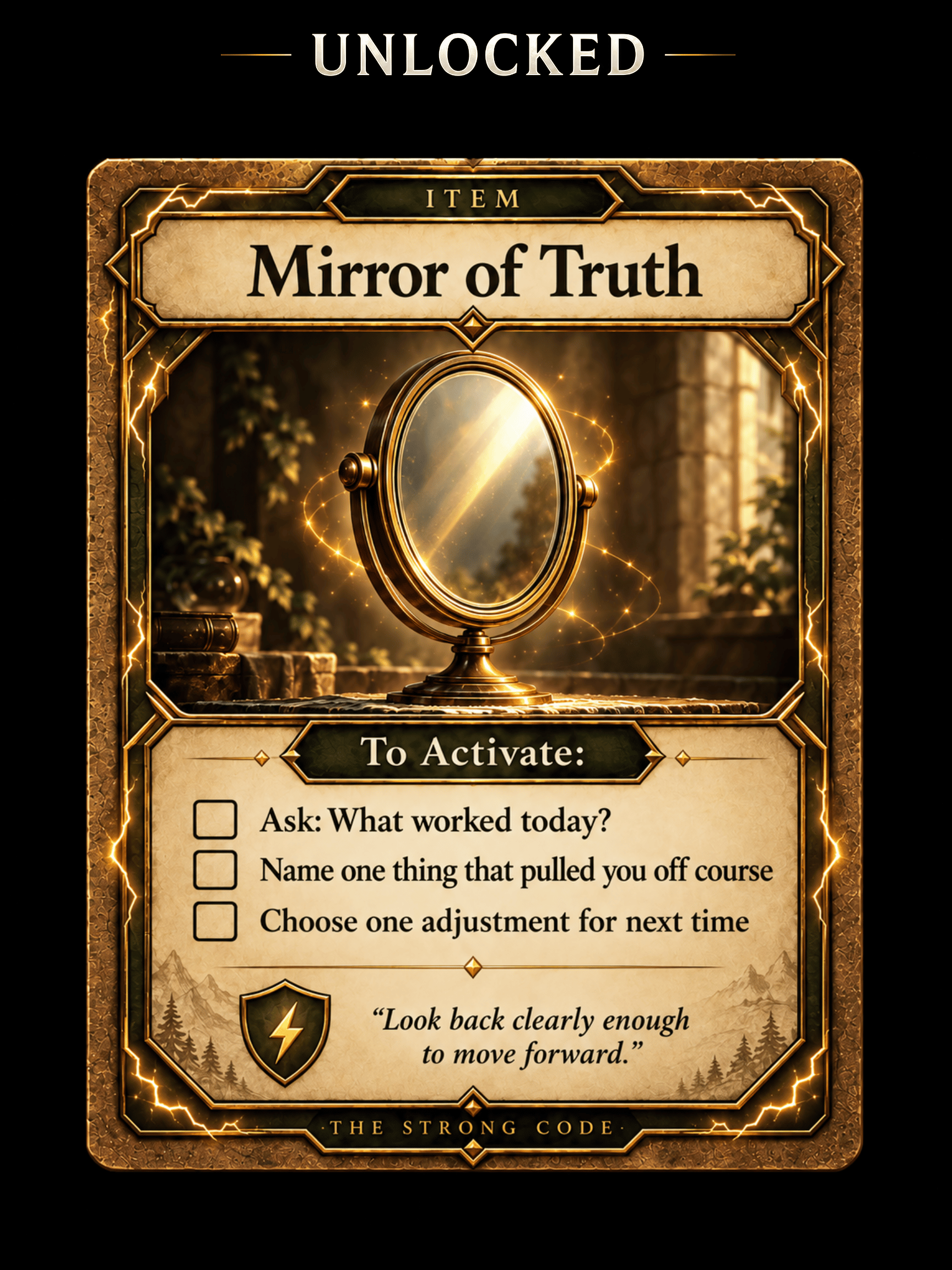
Take 5 minutes + ask: What worked today? What pulled me off course? What would I change next time?
Reflection turns experience into useful feedback.
-
Choose one small action you can realistically complete each day for the next 3 days.
Keep it simple enough to repeat + use it as proof that you can follow through.
-
You now have the structure, the energy, the capability + the focus. The next step is to put the system to work in real life. Pick one code that would make the biggest difference right now, choose a simple action you can repeat + track it daily so progress becomes visible.
🏟️ Use the Strong Code app or starter tools to log your actions, build streaks + turn what you have learned into something you can actually follow through on. This is where the system stops being information + starts becoming your operating system.